
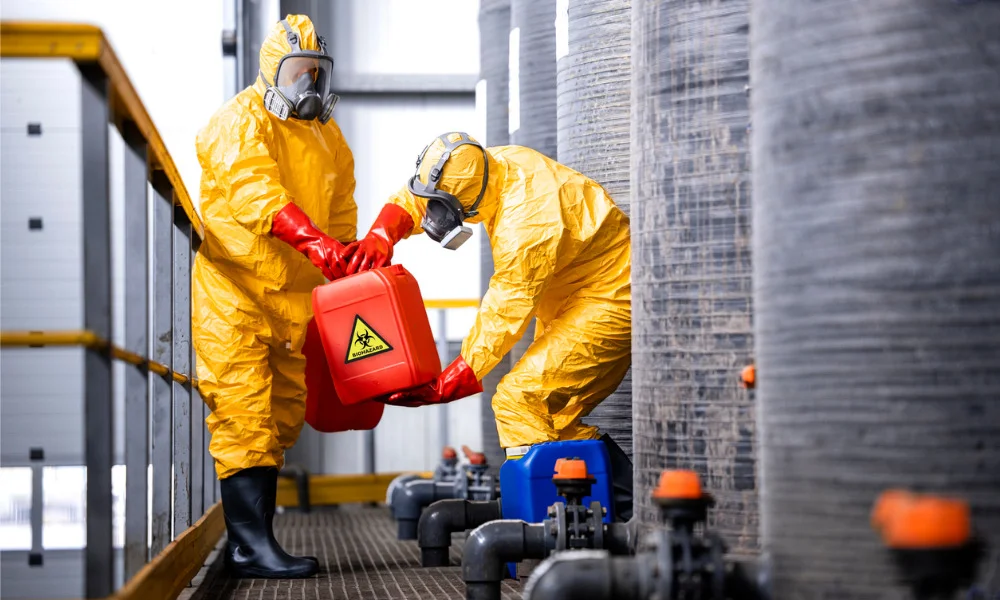
Target Audience:
- Safety officers and managers in industries dealing with chemicals and hazardous materials
- Environmental health and safety (EHS) professionals
- Workers involved in chemical handling, transportation, and storage
- Regulatory compliance officers
Prerequisites: Basic understanding of workplace safety and risk management is beneficial.
Delivery Mode: In-person, virtual, or blended learning formats available.
Key Materials:
- Chemical Safety Data Sheets (SDS)
- Personal protective equipment (PPE) guides
- Emergency response and spill containment procedures
Course Objectives:
By the end of this course, participants will:
- Understand the regulations and safety standards associated with chemical handling.
- Learn to identify, assess, and mitigate the risks posed by hazardous chemicals.
- Gain practical knowledge in the proper handling, storage, and disposal of hazardous materials.
- Develop and implement safety measures to protect workers and the environment from chemical hazards.
Course Outline:
Module 1: Introduction to Chemical Safety
- Overview of chemical safety and its importance in industrial settings
- Common types of hazardous chemicals (e.g., flammable, corrosive, toxic, reactive)
- Legal and regulatory frameworks governing chemical safety (e.g., OSHA, EPA, REACH)
- Chemical safety programs and their role in preventing accidents and exposure
Module 2: Chemical Safety Regulations and Standards
- Key regulations for chemical safety and hazardous materials handling
- Understanding Safety Data Sheets (SDS) and their role in chemical safety
- OSHA’s Hazard Communication Standard (HCS)
- International guidelines and best practices for chemical handling and storage
Module 3: Hazardous Materials Identification and Classification
- How to identify hazardous chemicals in the workplace
- Hazard symbols, labels, and color codes for chemicals
- Understanding chemical classifications (flammable, explosive, carcinogenic, etc.)
- Risk assessments and hazard analysis techniques
Module 4: Proper Handling and Storage of Chemicals
- Safe handling techniques for various types of hazardous chemicals
- Key safety measures for handling chemicals (e.g., ventilation, protective gear, spill containment)
- Safe storage practices and the importance of labeling, segregating, and inventory control
- Chemical compatibility and incompatibility considerations
Module 5: Personal Protective Equipment (PPE) for Chemical Safety
- Types of PPE for chemical safety (e.g., gloves, goggles, respirators, protective clothing)
- Selecting the right PPE for specific chemicals and tasks
- PPE maintenance, inspection, and proper usage
- Importance of PPE in preventing exposure and accidents
Module 6: Spill Management and Emergency Response
- Procedures for managing chemical spills and leaks
- Emergency response plans for chemical incidents (e.g., fire, chemical exposure, explosion)
- Spill containment, neutralization, and cleanup methods
- First aid for chemical exposure and contamination
Module 7: Waste Disposal and Environmental Protection
- Safe disposal methods for hazardous chemicals and materials
- Managing chemical waste in compliance with environmental regulations
- Spill reporting and the importance of proper documentation
- Environmental impact of hazardous chemicals and the role of safety programs in reducing risk
Module 8: Training and Safety Programs
- Developing and implementing chemical safety training programs for employees
- Ensuring proper training on chemical hazards, PPE, and emergency response protocols
- Communicating safety standards effectively across departments
- Promoting a safety-first culture within the organization
Module 9: Risk Management and Continuous Improvement
- Techniques for monitoring and assessing chemical safety risks
- Implementing continuous improvement processes in chemical safety management
- Lessons learned from past incidents and near-misses
- Regular audits, inspections, and safety performance evaluations
Assessment & Certification:
Assessment Methods: Quizzes, case studies, group exercises, and practical demonstrations of handling chemicals and emergency response
Certification: Upon successful completion, participants will receive a certificate in Chemical Safety and Hazardous Materials Handling.
This certification signifies that the participant is equipped to handle hazardous chemicals safely, implement proper safety measures, and respond effectively to chemical emergencies in the workplace.